ServicesGutters
Gutters in Noble, Sized and Pitched to Carry Roof Water Away
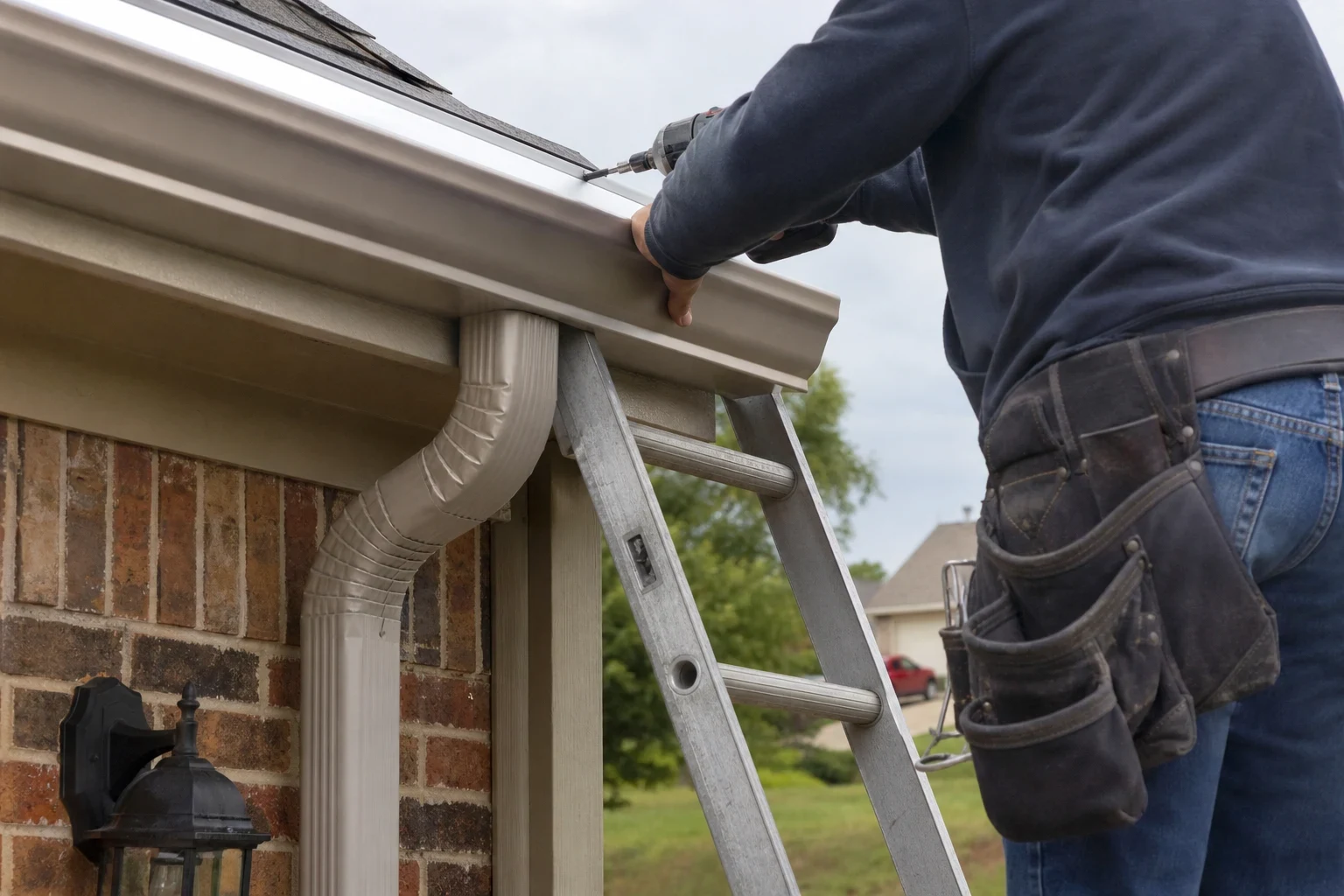
We install and repair gutters that match the water your roof actually sheds. That means the right trough size, enough downspouts, a steady pitch and a clean tie-in under the drip edge, so runoff lands away from your foundation instead of behind the fascia.
What a Gutter System Is Supposed to Do
A gutter is the last part of your roof's drainage path. Water runs down the shingles, over the drip edge and into the trough, then the downspouts carry it to the ground. If any link is off, the water goes somewhere it shouldn't: behind the gutter into the fascia board, over the front edge onto your beds, or straight down along the foundation.
That last one matters here. Much of central Oklahoma sits on clay that swells when wet and shrinks when dry, and the residential code calls for roof runoff to be carried away from the foundation where soils behave that way. We treat downspout placement and discharge as part of the job, not an afterthought.
We handle new gutter installation, partial replacement and repairs to existing runs. If your gutters are tied up with a roofing problem, we'll tell you, and that work falls under our roof repair or roof replacement service.
What the Gutter Work Includes
- Sizing from your roof
- We measure the roof area draining to each run and look at pitch, since a steep roof throws water harder. That tells us whether 5-inch K-style is enough or whether a run needs 6-inch troughs and 3x4 downspouts.
- One-piece runs formed on site
- We roll aluminum gutters from coil right at your home, cut to the exact length of each eave. A straight run comes off the machine as a single piece with no splice in the middle. Seams appear only where the gutter turns or terminates, which leaves far less sealant exposed to years of summer heat.
- Hidden hangers on a set spacing
- We fasten into the rafter tails or solid fascia with screws, not spikes, at close intervals. Tight spacing keeps the trough from sagging under wet leaves or a load of ice.
- Drip edge and fascia check
- Before anything goes up, we check that the drip edge laps into the gutter and probe the fascia for soft spots. Hanging new gutters on rotted wood just moves the problem.
- Downspouts and discharge
- We place downspouts where the water collects, add elbows and extensions, and aim discharge away from the slab or crawlspace. Where a run is long, we split it so it drains both ways.
Warning Signs at the Roof Edge
Overflow during heavy rain
When rain spills past the outer lip in a strong spring storm, the usual causes are a trough too small for the roof above it, a blocked outlet or a slope that tilts away from the downspout.
Stains or peeling paint on the fascia
Streaks behind the gutter point to water getting past the drip edge. Left alone, it rots the fascia and can reach the roof deck.
Sagging or pulled-away sections
Old spike-and-ferrule fasteners loosen as wood dries out. Once a section drops, water pools at the low spot instead of draining.
Dents and split seams after hail
Hail can crimp a trough and crack corner seals. If your roof took a hit too, our storm damage repair page covers how we look at both.
Washouts or settling near the foundation
Trenches in the mulch, standing water by the slab or new cracks in a walkway often trace back to a short downspout.
How a Gutter Job Runs
- 1
Look and measure
We walk the roof edge, measure each run, note where water collects and check the fascia and drip edge. You'll hear what we found and what we'd change.
- 2
Check permit needs
A like-for-like gutter swap usually doesn't need a permit, but changes to drainage or work tied to a reroof can. We confirm with the local office so you aren't guessing.
- 3
Remove and repair
Old gutters come down, nails and debris get picked up, and any soft fascia is replaced before the new system goes on.
- 4
Form, hang and pitch
We roll each run, set the slope toward the outlets at roughly a quarter inch per ten feet, seal the miters and end caps, and attach downspouts.
- 5
Water test and cleanup
We run water through each section to confirm it drains without standing, then clean up scrap and screws from the yard and beds.
What Moves the Cost of Gutters
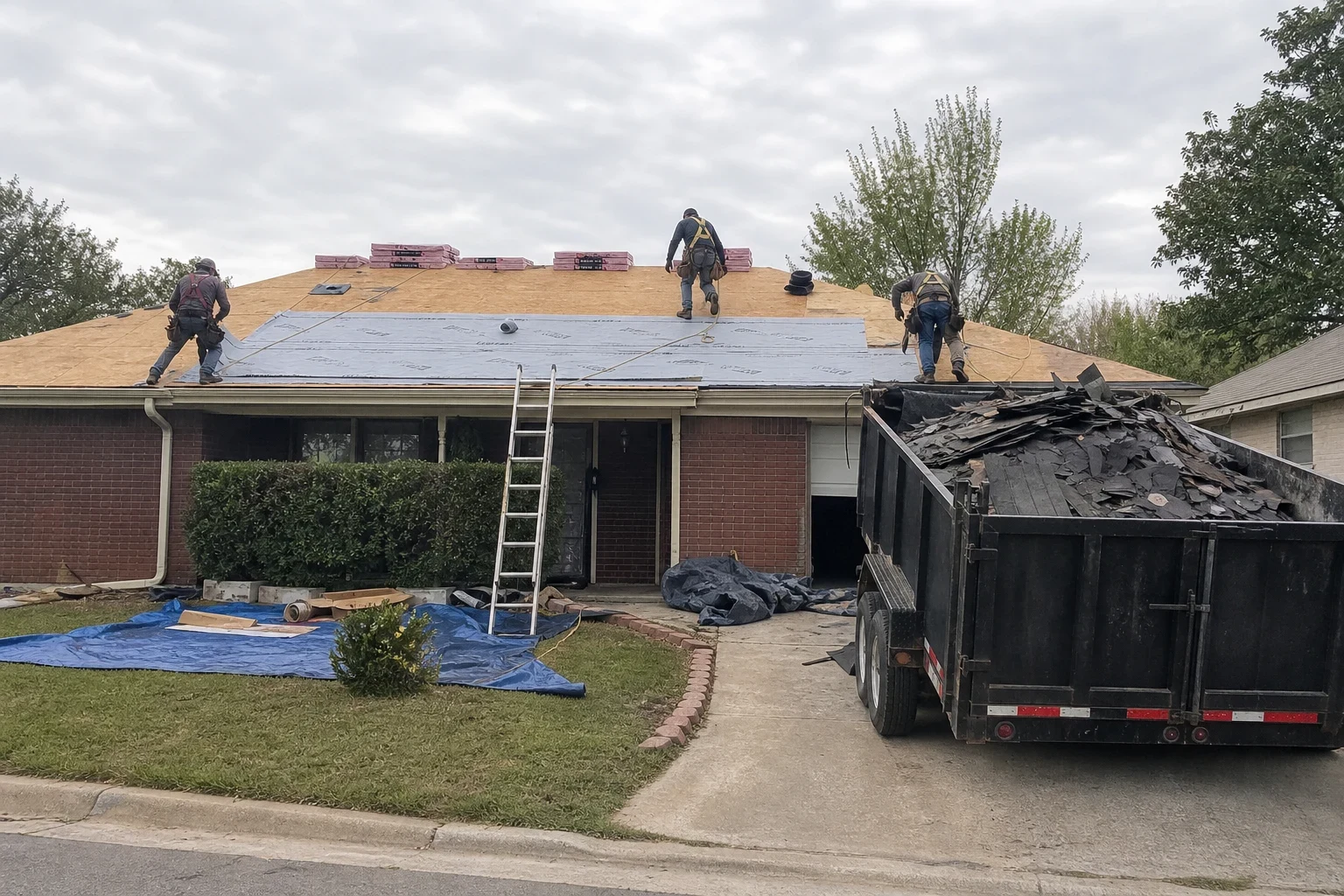
Most of a gutter price is set by footage and by what it takes to hang the system correctly. After we measure, we go over the price with you by phone and name each item, so nothing is lumped into one number.
- Total run length and miters
- The number of feet we hang drives most of the cost. Each inside or outside corner adds cutting, fastening and sealing time.
- Trough and downspout size
- Six-inch gutters and 3x4 downspouts use more material than 5-inch and 2x3, but they're often the right call for large or steep roof planes.
- Fascia condition
- Rotted fascia or missing drip edge has to be fixed first. We can't tell how much until the old gutters come down, so we point out suspect areas ahead of time.
- Height and access
- A two-story eave or a run over a deck or steep grade takes more setup and time than a single-story ranch edge.
Common Gutter Questions
Something not covered here? (405) 913-1476
Will new gutters need a permit?
A simple replacement on an existing home usually doesn't. Noble, Norman and the county don't always follow the same rules, and changes that send water toward a neighbor's property can get noticed. We find out before the job begins and let you know what applies.
Which is right for me, 5-inch or 6-inch gutters?
That depends on the roof area feeding each run and its pitch. Plenty of homes get by with 5-inch, but long runs below large roof planes spill over in hard rain. We size every run on its own instead of using one size for the whole house.
What makes water run behind the gutter?
Usually the drip edge ends before it reaches the trough, or the gutter sits too low on the fascia. Instead of falling in, the water tracks down the board. We fix the connection so the drip edge overlaps into the gutter.
Can my gutters be replaced without roof work?
Most of the time, yes. We work below the existing drip edge and leave the shingles alone. If the roof edge is damaged or the roof will need replacing soon, we'll tell you, since doing both together is simpler.
How long will a gutter installation take?
Most single-story homes take one day, removal and cleanup included. A second story or fascia repairs can stretch that, and we let you know before the work starts.
Get Gutters That Drain Where They Should
Tell us what you're seeing at the roof edge. We'll talk through sizing, downspout placement and any fascia concerns, then set up a time to measure.