ServicesRoof Replacement
Roof Replacement in Noble, Built Layer by Layer to Code
We tear your old roof down to the deck, fix what we find underneath and build the new system layer by layer to the residential code. We pull the permit, explain each requirement before work starts and leave you a roof that passes inspection.
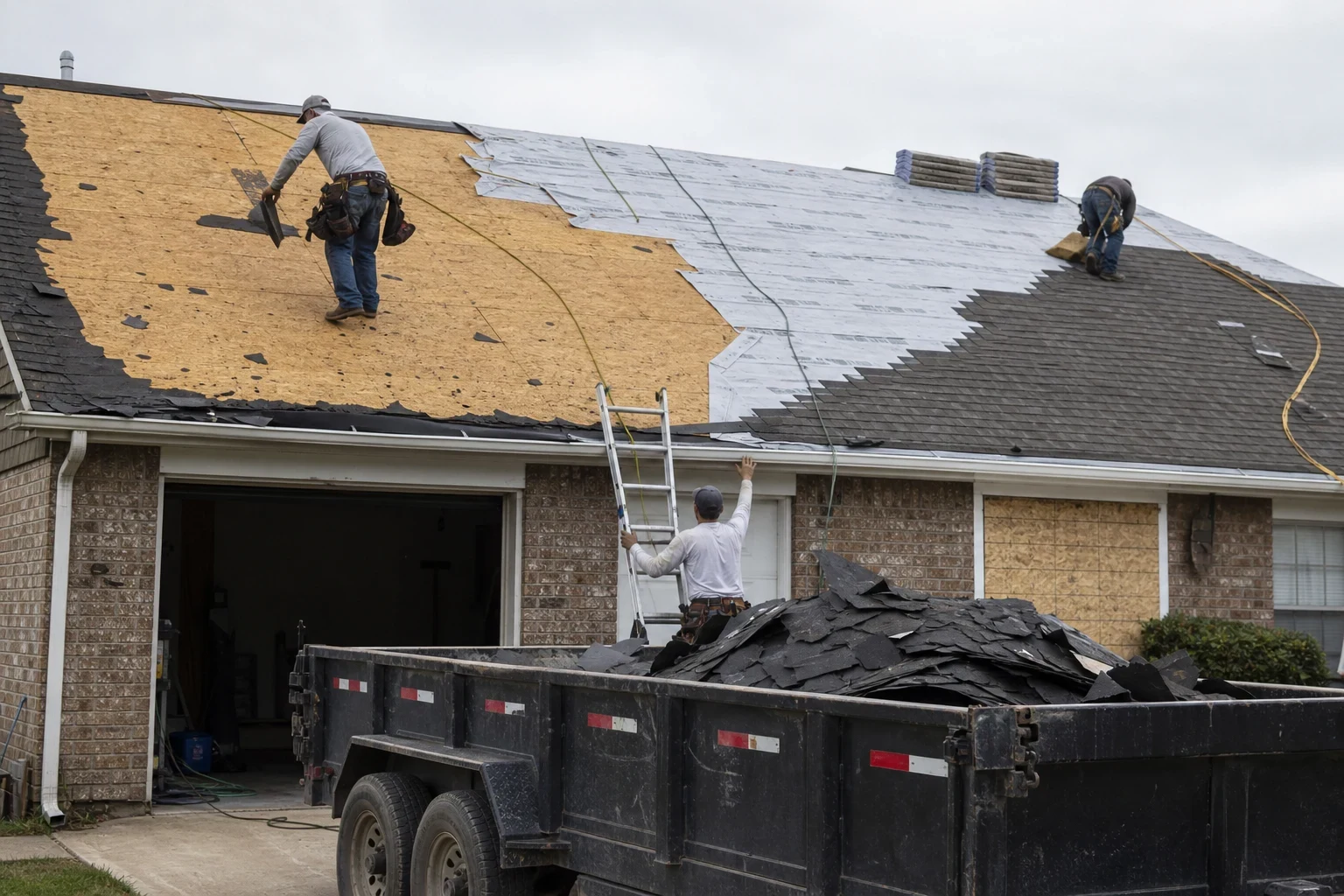
When Replacement Is the Right Call
A roof needs replacing when the shingles themselves have stopped doing their job: granules worn off, mats cracked or brittle, seal strips that no longer hold in wind. At that point, patching one spot just moves the leak a few feet over. If the damage is limited to a few shingles or one flashing detail, our roof repair page covers that work, and we will tell you plainly which one your roof needs.
A replacement is more than new shingles. The code sets rules for how many layers can stay on the house, what goes at the eaves and rakes, how the underlayment laps and how the attic breathes. Those rules exist because each one prevents a specific failure. We explain them in plain terms so you know what you are paying for and why.
What a Full Replacement Includes
Complete tear-off
We remove every existing layer down to the decking. The code does not allow a new layer over two existing ones, or over shingles with hail damage, and a tear-off is the only way to see the wood underneath.
Decking inspection and repair
We walk the bare deck and replace soft, delaminated or rotted sheets before anything goes over them. You see photos of any bad wood before we replace it.
Drip edge and underlayment
Metal drip edge goes at the eaves and rakes, as the code requires, so water drips clear of the fascia instead of wicking behind it. Synthetic underlayment is lapped and fastened to the manufacturer's spec.
Flashing replaced, not reused
Step flashing at walls, pipe boots and chimney flashing are replaced with new material. Old flashing is often bent or corroded, and reusing it is a common source of leaks on new roofs.
Shingles nailed to the spec
Each shingle gets the fastener count and placement the manufacturer calls for in high-wind areas. Nails driven high or crooked are the main reason shingles lift in a strong gust.
Ventilation and final cleanup
We check that intake and exhaust vents meet the net free area the code calls for, then sweep the yard and driveway with a magnet for loose nails.
Signs Your Roof Is Ready to Be Replaced
Bare spots and granules in the gutters
Granules shield the asphalt from UV. Once they wash off in quantity, the mat dries out and cracks quickly.
Curling or cupped shingles
Edges that turn up or centers that sink usually point to age or poor attic ventilation cooking the shingles from below.
Leaks in more than one place
One leak is often a flashing problem. Several at once usually means the underlayment and shingles are failing across the roof.
Sagging rooflines or a spongy deck
A dip between rafters or a soft feel underfoot suggests moisture has reached the decking, which only a tear-off can fix.
Widespread hail bruising
After a spring hailstorm, soft dents across many slopes mean broken mats. Our storm damage repair page explains how we document that for a claim.
How the Job Runs, From Paperwork to Final
- 1
Inspection and written scope
We go up on the roof and into the attic, count layers, check ventilation and note decking concerns. You get a written scope that lists each code item and what it involves.
- 2
Permit pulled
We file with the city before the work date. If the job requires an inspection, we schedule it and explain what the inspector will check.
- 3
Tear-off and deck repair
Tarps cover landscaping and the dumpster sits where it won't block your driveway. We strip one section at a time and dry it in with underlayment the same day.
- 4
Installation
Drip edge, underlayment, flashing, shingles, ridge vent and ridge cap go on in order. We check nailing as we go rather than at the end.
- 5
Walkthrough and final inspection
We walk the finished roof with you, show photos of the deck and flashing work, and meet the city inspector for the final when one is required.
What Moves the Cost of a New Roof
We price a replacement only after we have measured the roof and seen its condition, so you will not find numbers here. Your written estimate lists each item separately, from tear-off to ridge cap, so nothing is lumped together. These are the things that move it most.
- Size and pitch
- Total squares set the material count. Steep slopes need extra safety setup and slow the crew down.
- What is already on the deck
- Every old layer comes off by hand and goes into the dumpster. A roof hiding a second or third layer under the top one takes longer to strip and weighs more to haul away.
- Decking condition
- Replaced sheets are priced per sheet, and you see the photos before we replace any.
- Shingle choice
- Standard architectural shingles cost less than impact-rated Class 4 shingles, which some insurers recognize with a premium discount. Ask your agent before you choose.
- Ventilation and flashing details
- Adding intake vents, a ridge vent or new chimney flashing adds parts and time but fixes problems the old roof had.
Roof Replacement Questions
Something not covered here? (405) 913-1476
Do I need a permit to replace my roof?
Most cities in the area require one for a full reroof, and we pull it for you. That filing is what triggers the inspection confirming the work meets code. A roofer who suggests skipping it is skipping that check.
Can you just put new shingles over the old ones?
Sometimes the code allows one overlay, but we rarely recommend it. You cannot see the decking, new shingles telegraph the bumps underneath, and an overlay is not allowed over hail-damaged shingles or two existing layers.
How long does a replacement take?
Most homes in Noble, Norman and Moore take one to two days on the roof once the city paperwork is approved. Large or steep roofs and heavy deck repairs add time. Rain stops tear-off, so we watch the forecast and reschedule rather than leave the deck exposed.
Do I need to be home during the work?
No, but we ask for access to the attic if we are changing vents, and for cars to be out of the driveway. Expect noise and some vibration indoors, so take down anything loose hanging on top-floor walls.
What happens to my gutters?
We protect them during tear-off and check that the drip edge sheds water into them correctly. If they are sagging or undersized, our gutters page covers replacing them while the crew is already here.
Get a Clear Plan for Your New Roof
Give us a rough idea of your roof's age and the trouble you've noticed. Once we have inspected it, we go over the scope, the permit and each code item with you before you commit to anything.