ServicesRoof Inspections
Roof Inspections in Noble, OK
We check your roof from the gutters to the ridge and from the attic side too. You get photos of what we found, the likely cause of each problem, and a plain explanation of where your roof meets current residential code and where it does not.
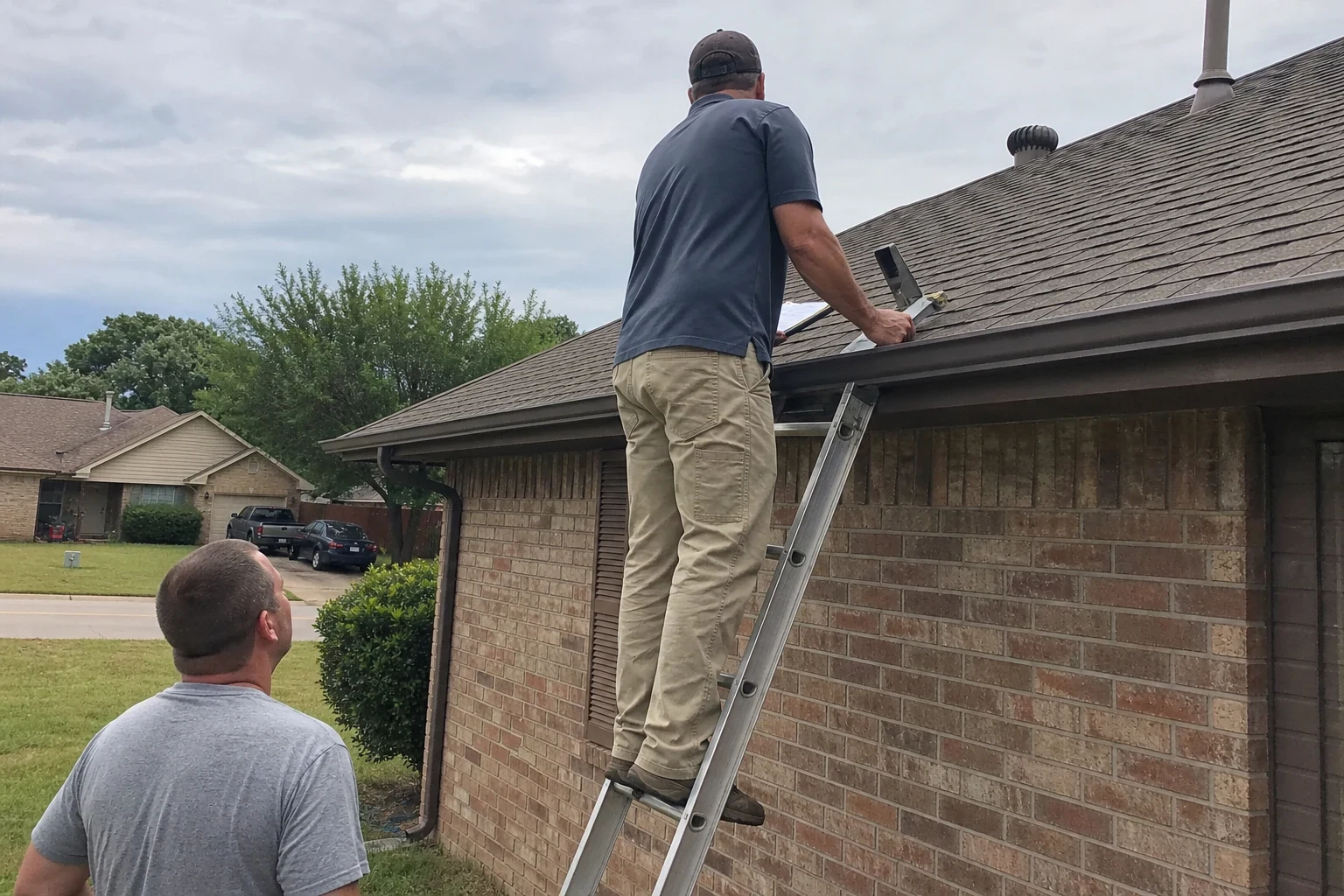
What a Roof Inspection Tells You
A roof inspection is a close, documented look at every part of the system that keeps water out of your home: the shingles, the underlayment you can see at the edges, the flashing, the vents and the decking underneath. Most roof trouble starts small, at a cracked pipe boot or a lifted shingle tab, and an inspection catches it while the fix is still minor.
We also read the roof against the residential code. That matters more than most people expect. If a roof already has two layers of shingles, code does not allow a third, so a future replacement means a full tear-off. If there is no drip edge at the eaves, or the attic is short on ventilation, those gaps will have to be corrected when the roof is redone. Knowing this now keeps a later estimate from surprising you.
Spring hail and straight-line winds around Noble can bruise shingles without leaving anything visible from the yard, so an inspection is often the only way to know what shape your roof is in.
What Every Inspection Covers
- Shingles and how they're nailed
- We check for lost granules, hail bruises, cracked or curling tabs and shingles whose seal strip has let go. Where it's safe, we lift some tabs to see if the nails are in the right spot and driven properly, because nails set high or driven too deep often lead to blow-offs.
- Flashing and roof openings
- We look at wall step flashing, chimney counterflashing, kickout flashing where the roof meets a wall, and the rubber boots on plumbing vents. Summer heat dries those boots until they split, and they rank among the leak sources we see most.
- Eaves, rakes and drip edge
- We confirm drip edge is in place along the eaves and rakes the way current code requires, and look at the fascia and deck edge behind it for rot or water stains.
- Attic airflow and decking
- Inside the attic we watch for light at nail holes, stained or separating plywood, frost or moisture marks, and soffit vents that are blocked. We measure the intake and exhaust vent area against what code calls for given the attic's size.
- Layer count and general condition
- We verify how many roofing layers the house has and estimate how much life the current roof has left.
- Gutters and water flow
- We note granules building up in the gutters, loose hangers and downspouts that empty against the foundation. Any gutter work needed is covered on our gutters page.
When It Makes Sense to Schedule an Inspection
After hail or high wind
Hail can crack the mat of a shingle while leaving the surface looking fine from the ground. A close look tells you whether you have real damage before you decide anything about an insurance claim.
Granules in the gutters or at downspouts
A steady stream of dark sand-like granules means the shingle surface is wearing away and the asphalt underneath is exposed to sun.
Stains on ceilings or in the attic
Even a dried stain is worth tracing. Water often travels along a rafter before it shows, so the leak point can be several feet from the mark.
Buying or selling a home
An inspection shows the number of layers, the condition of flashing and any code gaps, so both sides know what the roof will need.
A roof past 15 to 20 years
Asphalt shingles near the end of their life fail faster each season. Knowing where yours stands helps you plan a repair or a replacement on your schedule.
How Inspection Day Goes
- 1
We set the visit by phone
When you call, we ask about the roof's age, any leaks or storm history, and whether the inspection is for a sale, a claim or your own planning. That tells us what to focus on.
- 2
Ground walk and gutters
We start on the ground, checking roof lines for sagging, the fascia and soffits, and what is collecting in the gutters and at the downspouts.
- 3
On the roof
We walk the roof where the pitch allows it safely, photographing shingles, flashing, vents, valleys and edges. On steep sections we use ladders and close-up photos instead of walking on brittle shingles.
- 4
In the attic
With your okay, we check the underside of the decking, the ventilation and the insulation line at the eaves, which is where hidden moisture problems usually show first.
- 5
Findings, in plain terms
We go through the photos with you, explain what each problem is and why it happened, and note anything that would need to be brought up to code during future work. If something needs fixing, we tell you whether roof repair will do or whether replacement is the honest answer.
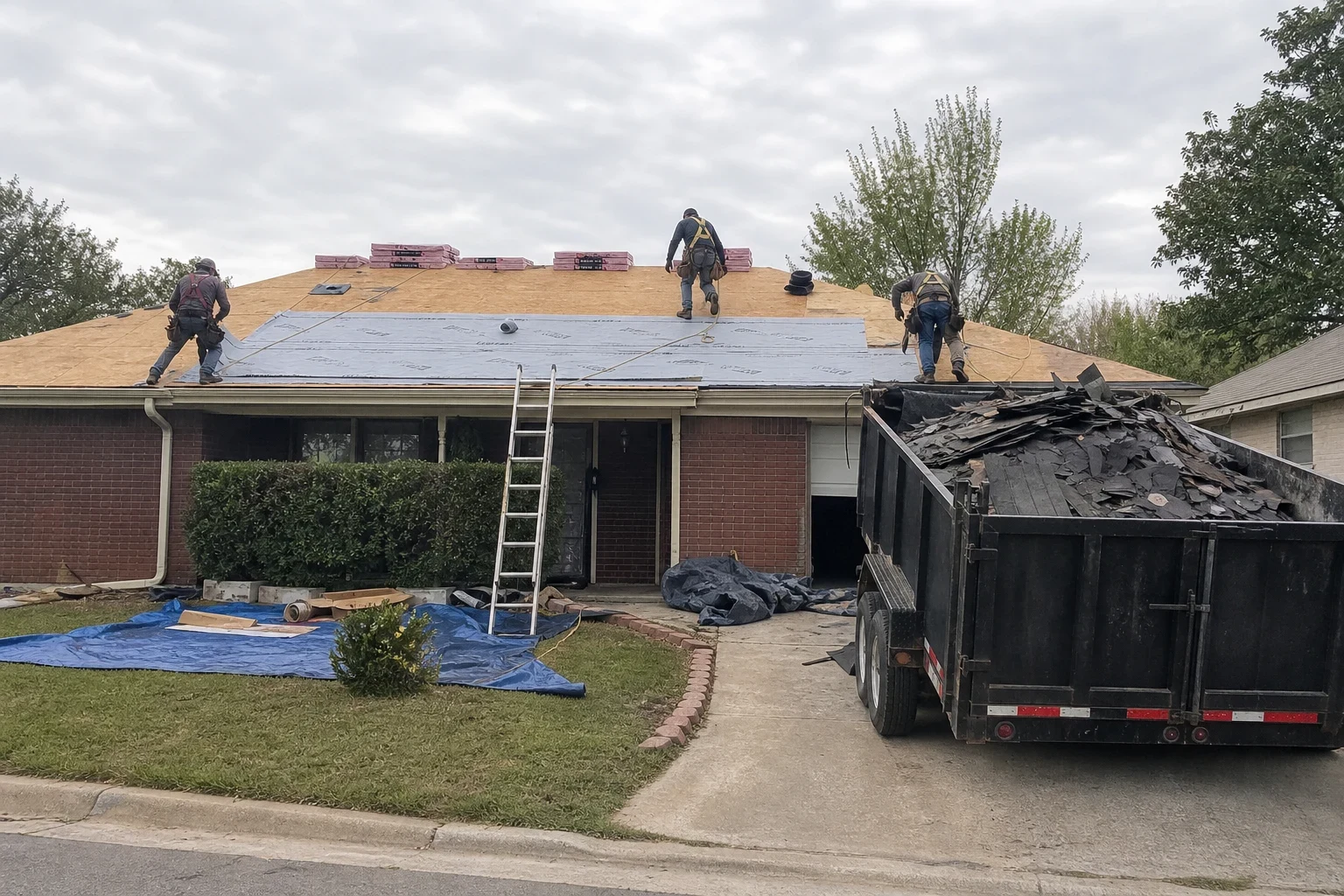
What Affects the Cost of an Inspection
Inspection cost depends mostly on how much roof there is and how hard it is to reach every part of it safely. We talk through what applies to your home when you call, so you know before we arrive.
- Roof size and stories
- A two-story house with several roof planes takes longer to cover than a single-story ranch with a simple gable.
- Pitch and access
- Steep slopes need more ladder work and safety setup, and some sections can only be documented from a ladder or the edge.
- Attic access
- A walkable attic with a pull-down stair is quick. A small hatch in a closet or a low-clearance attic takes more time.
- Purpose of the report
- Storm documentation for an insurance claim or a pre-sale review calls for more photos and a more detailed written record than a routine checkup.
Questions About Roof Inspections
Something not covered here? (405) 913-1476
How much time does an inspection take?
Plan on roughly an hour to an hour and a half for most homes, including the attic. Bigger houses and steep roofs with many angles take longer. We go through all the photos with you before we pack up the ladders.
Do I need to be home for the inspection?
We can look at the outside without you, but an adult needs to give us access to the attic. If you're there, you can also review the photos with us and ask about anything you don't follow.
Will you tell me whether a new roof can go over my current one?
Yes. We count the existing layers and check the deck. Code doesn't permit a new layer on top of two existing ones, over hail-damaged shingles or over wet decking, so we'll say clearly if the whole roof would have to come off.
Should I get an inspection before filing a hail claim?
In most cases, yes. You get dated photos of every damaged area plus a written note of the bruising, cracked tabs or bent metal we found, which gives your talk with the insurer something concrete to go on. Your adjuster makes the coverage call, not us. If there is damage, our Storm Damage Repair page explains how we work with you through the claim steps.
How often should I have my roof inspected?
For most roofs, every year or two makes sense, plus after any big hail or wind storm. Older roofs and ones that have leaked before deserve more frequent checks.
What if you find something wrong?
We show you the photo, explain the problem and describe what the fix would take. The next step is your call, and nobody will push you to schedule work that day.
Find Out Where Your Roof Stands
We serve Noble and nearby towns like Norman, Moore and Purcell. Give us a call to set up a time and tell us what you have noticed.